기독교세계관학술동역회와 게리토마스는 누구인가?1
기독교세계관학술동역회와 게리토마스는 누구인가?1
심리학과 신비주의 영성의 위험성을 아시려면 다음 책을 참고하시면 됩니다.
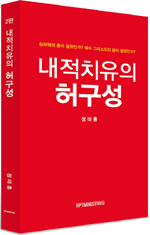

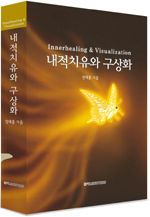
기독교세계관학술동역회(http://www.worldview.or.kr/subpage/index.asp)는
다음과 같이 "비전/목표"를 말합니다.

(자료출처 http://www.worldview.or.kr/subpage/csak/info_02.asp)
이 비전을 이루기 위하여 이사회와 실행위원회가 있으며, 그 산하에 출판소(CUP)가 있습니다.
그 조직을 구체적으로 살펴보면 다음과 같습니다.

(자료출처 http://www.worldview.or.kr/subpage/csak/info_04.asp)
이 출판을 담당하는 CUP의 책들 중에는 정말 좋은 책들도 있지만,
그럼에도 불구하고 아연실색케 하는 책들도 있습니다.
그것은 바로 CUP이 "게리토마스"의 책을 출판한다는 것입니다.


(자료출처http://www.worldview.or.kr/subpage/cup/cup_03.asp)
그리고 더 경악스러운 것은
대천덕 신부의 글이 포함된 책도 출판했다는 것입니다.

(자료출처 http://www.worldview.or.kr/subpage/cup/cup_03.asp)
그러면 게리토마스는 누구일까요? 게리 토마스는 무엇을 가르칠까요?
게리토마스는 신비주의 영성을 가르치는 사람입니다.
아래의 글에서 보듯이, 게리토마스는 한 단어를 20분 동안 계속 반복하면서 침묵으로 들어가라고 하는 사람입니다.
이런 것은 만트라를 하면서 무념무상의 세계로 들어가라고 하는 동양의 신비주의 영성과 동일한 것입니다.
In ten years, not one critic has been able to give us a legitimate example of where Yungen took a quote out of context or where he used mere guilt by association. He has used guilt by promotion or guilt by proxy, a very valid form of proof, but that is much different than guilt by association. He has sometimes used guilt by association as a reinforcement of what has already been proven but never as a stand-alone argument. As for taking things out of context, Lighthouse Trails checked every single quote that Ray Yungen cited in the book, and not one quote was taken out of context. When Brennan Manning or Henri Nouwen or Gary Thomas told readers to repeat a word over and over for twenty minutes to enter “the silence,” that is what they meant. When the contemplative mystic Thomas Merton said he believed that every human being has divinity within, that is what he meant. And when Rick Warren said that the spiritual formation movement (i.e., contemplative prayer) is a “valid message for the church” that has “given the body of Christ a wake-up call” (PDC, p. 127 ), that is exactly what he meant! These quotes in A Time of Departing were not taken out of context by any means. (자료출처 http://www.lighthousetrails.com/blog/?tag=gary-thomas)
참고자료---------------------------
THURSDAY, APRIL 8, 2010
What Can Evangelicals Learn from Catholic Worship?
On Good Friday, I visited my son, a sophomore at Notre Dame. We went to the Good Friday service at the Basilica of the Sacred Heart, on Notre Dame’s campus. It was packed, standing room only, fifteen minutes before the service started. I was struck by several things that Roman Catholics do in their worship services that evangelicals could learn from.
(Keep in mind, over the past fifteen years of being an author and speaker, I’ve attended worship services in literally hundreds of churches, somewhere between four and five hundred in all, so I think I have a pretty broad understanding of evangelical worship. When I make generalizations about evangelical worship, I’m not referring to just one or two churches.)
One of the first things that struck me took place in the first ten seconds. Just about every evangelical church worship service—even on Good Friday—begins with a guitar. This may be a matter of personal preference, but I think the singularly worst way to start a Good Friday service is by strumming a guitar. Because most worship leaders are musicians first, it rarely occurs to them to start out with something that doesn’t have them front and center, and second, doesn’t have them holding their instrument of choice.
At the basilica at Notre Dame, the “worship leaders” began in the back, slowly making their way up front, holding a cross, with a deep bass drum keeping pace. It was an appropriately sober and somber beginning that took you out of your day and thrust you into the reality of the sacredness of Good Friday. Nobody was focusing on any worship leader; our thoughts were drawn to the cross making its way forward.
Secondly, I was astonished by the breadth of Scripture shared during the service. Various people read, chanted, or sang at least four, and possibly five, full chapters of Scripture. Evangelicals take pride in our stance on the authority of Scripture over tradition, but most evangelical worship services barely reference Scripture at all. Instead, we are beholden to cliche-ridden songs, often written by the worship leader him/herself. There is a commendable humility in a form of worship that assumes God’s thoughts are more powerful and more important than our own.
Third, the priest gave a homily that was precisely 12 minutes long (yes, I timed it). I couldn’t tell you what his point was. The language was flowery, delivered dramatically, but if there was a compelling thread, I couldn’t find it. What I found tremendously refreshing, however, is that the priest’s name wasn’t listed in the bulletin. He wasn’t even introduced. I’ve told my son that I may be held account on the Day of Judgment for all the time wasted on this earth as church members had to listen to me being introduced. I always tell churches that shorter is better, but the fact that the priest’s name wasn’t mentioned at all spoke of how the message is more important than the messenger. That’s another refreshing change.
Other elements were singularly Catholic—venerating “the wood of the cross,” making the Mass the center piece, but here’s the thing: when we left, our minds were filled with what Christ did on Good Friday. We weren’t impressed with any individual’s musical talent or any speaker’s oratory. The only one who impressed us was Christ.
In evangelical worship, two individuals are almost solely responsible for a “good” service (as defined by those who attend)—the worship leader and the teacher. If one or both are “on,” people will be satisfied. At the service at the basilica, no one individual could either make the service succeed or doom it to fail. There really wasn’t a central worship leader, not in an evangelical sense, and the teaching time was only 12 minutes out of 100.
Personally, I like a longer sermon—especially, one with a clear point. And of course, as evangelicals, my son and I didn’t participate in the Eucharist. But here’s what evangelicals can learn from worship, Roman Catholic style:
• Let’s break out of our guitar rut, if only for one week out of the year. It’s possible to lead worship without strumming six strings.
• Is it always necessary to have the worship leader front and center, all eyes focused on him/her? Can’t we find a way to facilitate a focus on Jesus?
• Isn’t it possible that hearts would be informed, transformed, and blessed by more Scripture, and less bad poetry put to music?
• Has the teaching aspect of evangelical worship created a problem of personalities, in which the success of the service is largely dependent on one individual?
• How can we model more humility in our worship so that, when people leave, they think more about God and less about his servants?
POSTED BY GARY THOMAS AT 1:42 PM
(댓글 5개) 5 COMMENTS:
BonnieApril 8, 2010 2:55 PM
As a Catholic I love reading this. I am in the middle of a "Sacred Marriage" bible study at an evangelical church, a church that I attend a Mom's group. I do see the vast differences in the two. I grew up without baptism but I did believe. When I married a Catholic it was not until we had our first child that I felt the strong pull of wanting to be baptised so at the age of 30 I chose Catholic. I love that I can "belong" to both churches in a way.
I wrote a short post about Good Friday mass on my own blog (hoping you do not actually visit it and see all my grammar mistakes!)lol.
Love your books, love hearing you speak on the DVD. We have 5 women in the study and I am learning so much.
Thank you
Reply
Virginia KnowlesApril 8, 2010 8:45 PM
Thanks, Gary. Always something good from your keyboard.
Reply
VivApril 22, 2010 8:38 AM
Two years ago at Easter-time, I was in Paris with my daughter and we attended the "Good Friday" service at Notre Dame Cathedral (it was actually the evening of Palm Sunday - not sure how that worked). I don't understand any French, but we had their service sheet and could recognize "Pilot" and "Barabas" and such as they chanted/sang through the scripture, so we followed somewhat. It was an amazing service! The organ piece at the end was incredible - pure anguish and despair. Very moving.
I've also been involved in the Coptic Orthodox church in Egypt. Wow, do they know how to celebrate Easter!! But that would take far too long to write about.
So, I agree. We've lost a bit of something in Protestantism.
Reply
TamaraMay 20, 2010 8:13 PM
This, my first stop to your blog, landed me smack dab on the topic I was discussing with a colleague earlier today! I attended Notre Dame for undergrad as well, graduating in 2006. My experience illuminated the world of Catholicism for the first time. I grew up completely surrounded by Protestants and my own faith grounded me in that tradition as well. Through a wonderful Bible study at Notre Dame called Iron Sharpens Iron, or ISI, I met fellow believers from both faith backgrounds who were united by a personal and relational love for Jesus Christ. It remains one of my favorite pictures of the "church" as the global, diverse bride of Christ. (I believe ISI still meets at 10 pm on Thursday nights in the Coleman-Morse building if your son might be interested. :) It was pivotal in changing my experience there from lonely into one blessed with wonderful friends and fellowship.)
Earlier today I was expressing that I believe one of the great beauties of interfaith exchange between Protestants and Catholics is the ability to bring together a more complete gospel message. When I attended mass at Notre Dame, I walked away with a tear in my eye every time because of the encounter with the deep power and holiness of God. On the other hand, Protestant churches tend to emphasize the intimately personal relationship that God desires with each one of us (sometimes to the point of diminishing the awe and reverence that He is so very worthy of).
The great beauty in unity comes when these two strengths are united to form a more cohesive view of God and how He interacts with His people.
I feel like I was given a glimpse of what God intended his body to look like - and perhaps what it could like again one day!
Reply
KevinJanuary 16, 2011 2:33 AM
Some "thoughtful thoughts" Gary. I've frequently, over the years I've been out of the USA, felt like we need to take our focus off of our full-timers, and direct it toward our saviour. All the best to you and your family.
Kevin C.
Reply
(자료출처 http://askgarythomas.blogspot.kr/2010/04/what-can-evangelicals-learn-from.html)
RPTministries 정태홍 목사
http://www.esesang91.com
http://twtkr.com/rptministries
http://www.facebook.com/RPTministries
심리학과 신비주의 영성의 위험성을 아시려면 다음 책을 참고하시면 됩니다.
기독교세계관학술동역회(http://www.worldview.or.kr/subpage/index.asp)는
다음과 같이 "비전/목표"를 말합니다.
(자료출처 http://www.worldview.or.kr/subpage/csak/info_02.asp)
이 비전을 이루기 위하여 이사회와 실행위원회가 있으며, 그 산하에 출판소(CUP)가 있습니다.
그 조직을 구체적으로 살펴보면 다음과 같습니다.
(자료출처 http://www.worldview.or.kr/subpage/csak/info_04.asp)
이 출판을 담당하는 CUP의 책들 중에는 정말 좋은 책들도 있지만,
그럼에도 불구하고 아연실색케 하는 책들도 있습니다.
그것은 바로 CUP이 "게리토마스"의 책을 출판한다는 것입니다.
(자료출처http://www.worldview.or.kr/subpage/cup/cup_03.asp)
그리고 더 경악스러운 것은
대천덕 신부의 글이 포함된 책도 출판했다는 것입니다.
(자료출처 http://www.worldview.or.kr/subpage/cup/cup_03.asp)
그러면 게리토마스는 누구일까요? 게리 토마스는 무엇을 가르칠까요?
게리토마스는 신비주의 영성을 가르치는 사람입니다.
아래의 글에서 보듯이, 게리토마스는 한 단어를 20분 동안 계속 반복하면서 침묵으로 들어가라고 하는 사람입니다.
이런 것은 만트라를 하면서 무념무상의 세계로 들어가라고 하는 동양의 신비주의 영성과 동일한 것입니다.
In ten years, not one critic has been able to give us a legitimate example of where Yungen took a quote out of context or where he used mere guilt by association. He has used guilt by promotion or guilt by proxy, a very valid form of proof, but that is much different than guilt by association. He has sometimes used guilt by association as a reinforcement of what has already been proven but never as a stand-alone argument. As for taking things out of context, Lighthouse Trails checked every single quote that Ray Yungen cited in the book, and not one quote was taken out of context. When Brennan Manning or Henri Nouwen or Gary Thomas told readers to repeat a word over and over for twenty minutes to enter “the silence,” that is what they meant. When the contemplative mystic Thomas Merton said he believed that every human being has divinity within, that is what he meant. And when Rick Warren said that the spiritual formation movement (i.e., contemplative prayer) is a “valid message for the church” that has “given the body of Christ a wake-up call” (PDC, p. 127 ), that is exactly what he meant! These quotes in A Time of Departing were not taken out of context by any means. (자료출처 http://www.lighthousetrails.com/blog/?tag=gary-thomas)
참고자료---------------------------
THURSDAY, APRIL 8, 2010
What Can Evangelicals Learn from Catholic Worship?
On Good Friday, I visited my son, a sophomore at Notre Dame. We went to the Good Friday service at the Basilica of the Sacred Heart, on Notre Dame’s campus. It was packed, standing room only, fifteen minutes before the service started. I was struck by several things that Roman Catholics do in their worship services that evangelicals could learn from.
(Keep in mind, over the past fifteen years of being an author and speaker, I’ve attended worship services in literally hundreds of churches, somewhere between four and five hundred in all, so I think I have a pretty broad understanding of evangelical worship. When I make generalizations about evangelical worship, I’m not referring to just one or two churches.)
One of the first things that struck me took place in the first ten seconds. Just about every evangelical church worship service—even on Good Friday—begins with a guitar. This may be a matter of personal preference, but I think the singularly worst way to start a Good Friday service is by strumming a guitar. Because most worship leaders are musicians first, it rarely occurs to them to start out with something that doesn’t have them front and center, and second, doesn’t have them holding their instrument of choice.
At the basilica at Notre Dame, the “worship leaders” began in the back, slowly making their way up front, holding a cross, with a deep bass drum keeping pace. It was an appropriately sober and somber beginning that took you out of your day and thrust you into the reality of the sacredness of Good Friday. Nobody was focusing on any worship leader; our thoughts were drawn to the cross making its way forward.
Secondly, I was astonished by the breadth of Scripture shared during the service. Various people read, chanted, or sang at least four, and possibly five, full chapters of Scripture. Evangelicals take pride in our stance on the authority of Scripture over tradition, but most evangelical worship services barely reference Scripture at all. Instead, we are beholden to cliche-ridden songs, often written by the worship leader him/herself. There is a commendable humility in a form of worship that assumes God’s thoughts are more powerful and more important than our own.
Third, the priest gave a homily that was precisely 12 minutes long (yes, I timed it). I couldn’t tell you what his point was. The language was flowery, delivered dramatically, but if there was a compelling thread, I couldn’t find it. What I found tremendously refreshing, however, is that the priest’s name wasn’t listed in the bulletin. He wasn’t even introduced. I’ve told my son that I may be held account on the Day of Judgment for all the time wasted on this earth as church members had to listen to me being introduced. I always tell churches that shorter is better, but the fact that the priest’s name wasn’t mentioned at all spoke of how the message is more important than the messenger. That’s another refreshing change.
Other elements were singularly Catholic—venerating “the wood of the cross,” making the Mass the center piece, but here’s the thing: when we left, our minds were filled with what Christ did on Good Friday. We weren’t impressed with any individual’s musical talent or any speaker’s oratory. The only one who impressed us was Christ.
In evangelical worship, two individuals are almost solely responsible for a “good” service (as defined by those who attend)—the worship leader and the teacher. If one or both are “on,” people will be satisfied. At the service at the basilica, no one individual could either make the service succeed or doom it to fail. There really wasn’t a central worship leader, not in an evangelical sense, and the teaching time was only 12 minutes out of 100.
Personally, I like a longer sermon—especially, one with a clear point. And of course, as evangelicals, my son and I didn’t participate in the Eucharist. But here’s what evangelicals can learn from worship, Roman Catholic style:
• Let’s break out of our guitar rut, if only for one week out of the year. It’s possible to lead worship without strumming six strings.
• Is it always necessary to have the worship leader front and center, all eyes focused on him/her? Can’t we find a way to facilitate a focus on Jesus?
• Isn’t it possible that hearts would be informed, transformed, and blessed by more Scripture, and less bad poetry put to music?
• Has the teaching aspect of evangelical worship created a problem of personalities, in which the success of the service is largely dependent on one individual?
• How can we model more humility in our worship so that, when people leave, they think more about God and less about his servants?
POSTED BY GARY THOMAS AT 1:42 PM
(댓글 5개) 5 COMMENTS:
BonnieApril 8, 2010 2:55 PM
As a Catholic I love reading this. I am in the middle of a "Sacred Marriage" bible study at an evangelical church, a church that I attend a Mom's group. I do see the vast differences in the two. I grew up without baptism but I did believe. When I married a Catholic it was not until we had our first child that I felt the strong pull of wanting to be baptised so at the age of 30 I chose Catholic. I love that I can "belong" to both churches in a way.
I wrote a short post about Good Friday mass on my own blog (hoping you do not actually visit it and see all my grammar mistakes!)lol.
Love your books, love hearing you speak on the DVD. We have 5 women in the study and I am learning so much.
Thank you
Reply
Virginia KnowlesApril 8, 2010 8:45 PM
Thanks, Gary. Always something good from your keyboard.
Reply
VivApril 22, 2010 8:38 AM
Two years ago at Easter-time, I was in Paris with my daughter and we attended the "Good Friday" service at Notre Dame Cathedral (it was actually the evening of Palm Sunday - not sure how that worked). I don't understand any French, but we had their service sheet and could recognize "Pilot" and "Barabas" and such as they chanted/sang through the scripture, so we followed somewhat. It was an amazing service! The organ piece at the end was incredible - pure anguish and despair. Very moving.
I've also been involved in the Coptic Orthodox church in Egypt. Wow, do they know how to celebrate Easter!! But that would take far too long to write about.
So, I agree. We've lost a bit of something in Protestantism.
Reply
TamaraMay 20, 2010 8:13 PM
This, my first stop to your blog, landed me smack dab on the topic I was discussing with a colleague earlier today! I attended Notre Dame for undergrad as well, graduating in 2006. My experience illuminated the world of Catholicism for the first time. I grew up completely surrounded by Protestants and my own faith grounded me in that tradition as well. Through a wonderful Bible study at Notre Dame called Iron Sharpens Iron, or ISI, I met fellow believers from both faith backgrounds who were united by a personal and relational love for Jesus Christ. It remains one of my favorite pictures of the "church" as the global, diverse bride of Christ. (I believe ISI still meets at 10 pm on Thursday nights in the Coleman-Morse building if your son might be interested. :) It was pivotal in changing my experience there from lonely into one blessed with wonderful friends and fellowship.)
Earlier today I was expressing that I believe one of the great beauties of interfaith exchange between Protestants and Catholics is the ability to bring together a more complete gospel message. When I attended mass at Notre Dame, I walked away with a tear in my eye every time because of the encounter with the deep power and holiness of God. On the other hand, Protestant churches tend to emphasize the intimately personal relationship that God desires with each one of us (sometimes to the point of diminishing the awe and reverence that He is so very worthy of).
The great beauty in unity comes when these two strengths are united to form a more cohesive view of God and how He interacts with His people.
I feel like I was given a glimpse of what God intended his body to look like - and perhaps what it could like again one day!
Reply
KevinJanuary 16, 2011 2:33 AM
Some "thoughtful thoughts" Gary. I've frequently, over the years I've been out of the USA, felt like we need to take our focus off of our full-timers, and direct it toward our saviour. All the best to you and your family.
Kevin C.
Reply
(자료출처 http://askgarythomas.blogspot.kr/2010/04/what-can-evangelicals-learn-from.html)
RPTministries 정태홍 목사
http://www.esesang91.com
http://twtkr.com/rptministries
http://www.facebook.com/RPTministries
독자 의견
댓글이 없습니다.